Austin
Silent SpringAustin is the setting of a 1961 fish kill that exposed how years of insecticide disposal could turn an urban drainage system into a source of sudden river contamination. The episode links the city’s waterways to routine industrial practices: after dead fish appeared in Town Lake and downstream, investigators followed the pollution back through storm sewers to insecticide residues and their release during a high-pressure flushing operation.
The fish kill
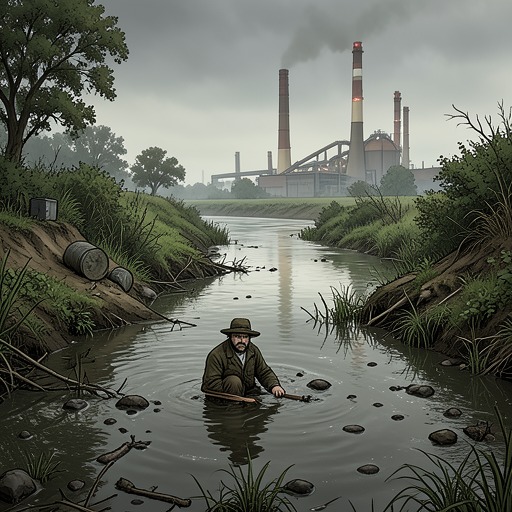
The fish kill began shortly after daylight on Sunday, January 15, 1961. Dead fish appeared in new Town Lake and along roughly five miles of the Colorado River below Austin. The scale and location of the deaths made the river itself a record of a contamination event whose source was not immediately apparent.
Investigators in Austin noticed odors associated with chlordane and toxaphene, particularly in the discharge from a storm sewer. That sewer had previously been associated with industrial-waste problems, directing attention toward a drainage route that connected city infrastructure with the river.
Tracing the contamination
Fishery officers traced insecticide residues through the sewer system, finding benzene hexachloride at openings as far back as a feeder line from a chemical plant. The plant manufactured DDT, benzene hexachloride, chlordane, and toxaphene, along with smaller quantities of other insecticides.
The plant manager acknowledged that powdered insecticide had recently been washed into the storm sewer and that disposing of spills and residues in this way had been common practice for ten years. Officers also found other plants where rainwater or ordinary cleanup water could carry insecticides into sewers. The pollution therefore reflected more than a single mishap: several routine routes existed for industrial chemicals to enter the drainage network.
The delayed release and its consequences
The crucial link was the timing of a sewer-system flush. A few days before the water became lethal to fish, the entire storm-sewer system had been flushed with several million gallons of high-pressure water to clear debris. The flushing undoubtedly released insecticides that had accumulated in the system, providing an explanation for how residues from repeated disposal practices could cause a sudden downstream crisis.
The response extended beyond Austin. In the last week of January, locks on the Intracoastal Waterway were closed to keep toxic water out of Matagorda Bay and divert it toward the Gulf of Mexico. The episode thus connects local industrial disposal and municipal drainage to the protection of waters far downstream: contaminants retained in the sewer system were not rendered harmless, but could be mobilized and carried onward when the system was cleared.